Jadwal Adzan Malang: Benefits, Drawbacks, and Who Should Use It
For Muslims living in or visiting Malang, knowing the precise times for the five daily prayers is a fundamental part of daily life. The jadwal adzan Malang — which translates roughly to the Malang prayer call schedule — provides the exact times for Fajr, Dhuhr, Asr, Maghrib, and Isya based on the city's geographic coordinates and the current Islamic calendar. As Malang sits in East Java at a specific latitude and longitude, its prayer times differ meaningfully from cities like Jakarta or Surabaya, making a locally calibrated schedule genuinely necessary rather than optional.
In 2026, access to these schedules has expanded considerably. Residents and visitors can find jadwal adzan Malang through mosque announcements, printed calendars issued by local religious authorities, dedicated websites, and a growing number of mobile applications. With so many sources available, it is worth understanding what using these schedules actually offers, where the limitations lie, and which types of people benefit most from consulting them.

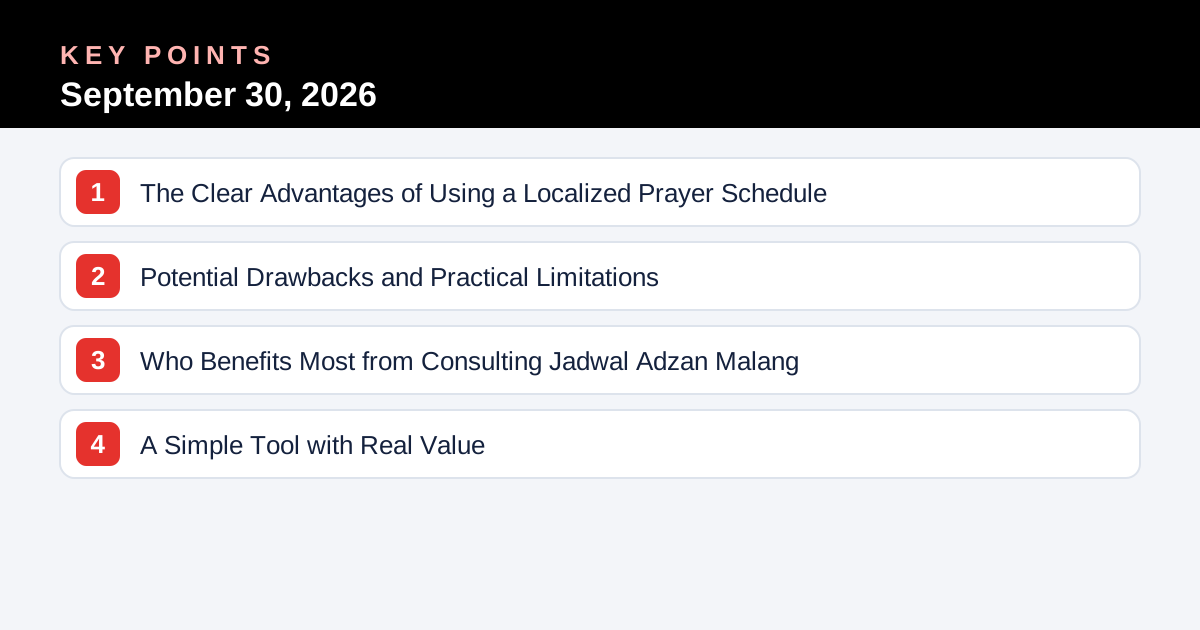
The Clear Advantages of Using a Localized Prayer Schedule
The most obvious benefit of a jadwal adzan Malang is accuracy. Prayer times in Islam are determined by the position of the sun relative to a specific location, so a schedule built around Malang's coordinates will be more precise than a generic national timetable. Fajr begins at a different moment in Malang than it does in Medan or Makassar, and even small differences in longitude and latitude can shift prayer windows by several minutes. For observant Muslims, those minutes matter.
A well-structured local schedule also brings routine and predictability to daily life. When you know that Maghrib falls at a consistent approximate time each evening — shifting gradually with the seasons — you can plan meals, work meetings, and travel around it without constant recalculation. Many residents of Malang describe structuring their entire day around the five prayer windows, and a reliable schedule makes that structure sustainable. Businesses in the city, particularly smaller shops and family-run establishments, also use these schedules to coordinate brief closures during prayer time.
Additional advantages include:
- Schedules are freely available from official sources such as the Ministry of Religious Affairs (Kemenag) regional office, removing any cost barrier.
- Digital versions update automatically to account for seasonal changes in sunrise and sunset.
- Many apps allow offline access, which is useful in areas with inconsistent internet connectivity.
- Integrated calendar formats show the full month at a glance, helping with longer-term planning such as Ramadan fasting schedules.
Potential Drawbacks and Practical Limitations
Despite the benefits, there are real limitations worth acknowledging. The first is variation between sources. Different organizations, apps, and websites may use slightly different calculation methods — such as different angles for determining the beginning of Fajr — which means two equally reputable sources can show times that differ by a few minutes. For someone new to using these schedules, this inconsistency can be confusing and may require some research into which method is recognized by the local mosque or religious authority they follow.
A second concern is over-reliance on digital tools. When a phone battery dies, an app crashes, or mobile data is unavailable, someone who has not internalized the approximate prayer times or who lacks a printed backup may find themselves uncertain. This is a minor but real inconvenience, particularly for travelers passing through Malang who depend entirely on a single app. Printed schedules issued by local mosques or the regional Kemenag office remain a practical and reliable backup.
There is also the matter of micro-location differences within the broader Malang area. The city of Malang, Malang Regency, and Batu — all part of the greater metropolitan area — occupy slightly different geographic positions. A schedule calibrated precisely for central Malang may be off by a minute or two for someone living in a more rural part of the regency. For most users this is a negligible difference, but those who prioritize exactness should confirm which specific coordinates their chosen schedule uses.
Who Benefits Most from Consulting Jadwal Adzan Malang
Permanent residents of Malang who pray five times daily are the clearest beneficiaries. Having a locally accurate, month-by-month schedule built into their routine reduces mental effort and supports consistent worship. This is especially true during Ramadan, when the timing of Sahur (the pre-dawn meal) and Iftar (breaking the fast at sunset) are directly tied to Fajr and Maghrib times respectively, and even a few minutes of inaccuracy has practical consequences.
Travelers and short-term visitors also gain significant value, particularly those unfamiliar with East Java's time zone and solar patterns. A quick check of the jadwal adzan before arriving in Malang allows them to plan their itinerary respectfully and avoid scheduling activities that conflict with prayer obligations. Hotels in the city increasingly provide printed prayer schedules at the front desk, reflecting how common this need is among guests.
Non-Muslim visitors and business contacts represent a less obvious but worthwhile audience. Understanding when prayer times fall helps them schedule meetings appropriately, anticipate brief pauses in service at local businesses, and engage more respectfully with the community. In a city where Islamic practice is deeply woven into daily rhythms, this awareness is a practical form of cultural literacy.
A Simple Tool with Real Value
The jadwal adzan Malang is, at its core, a straightforward informational resource — but its value in daily life is anything but trivial. Used thoughtfully, it supports religious practice, enables better planning, and bridges the gap between visitors and local culture. The key is choosing a reliable, officially recognized source, keeping a printed backup handy, and understanding that minor variations between schedules are normal rather than alarming. For anyone spending meaningful time in Malang, becoming familiar with the local prayer schedule is a small investment that pays consistent dividends.